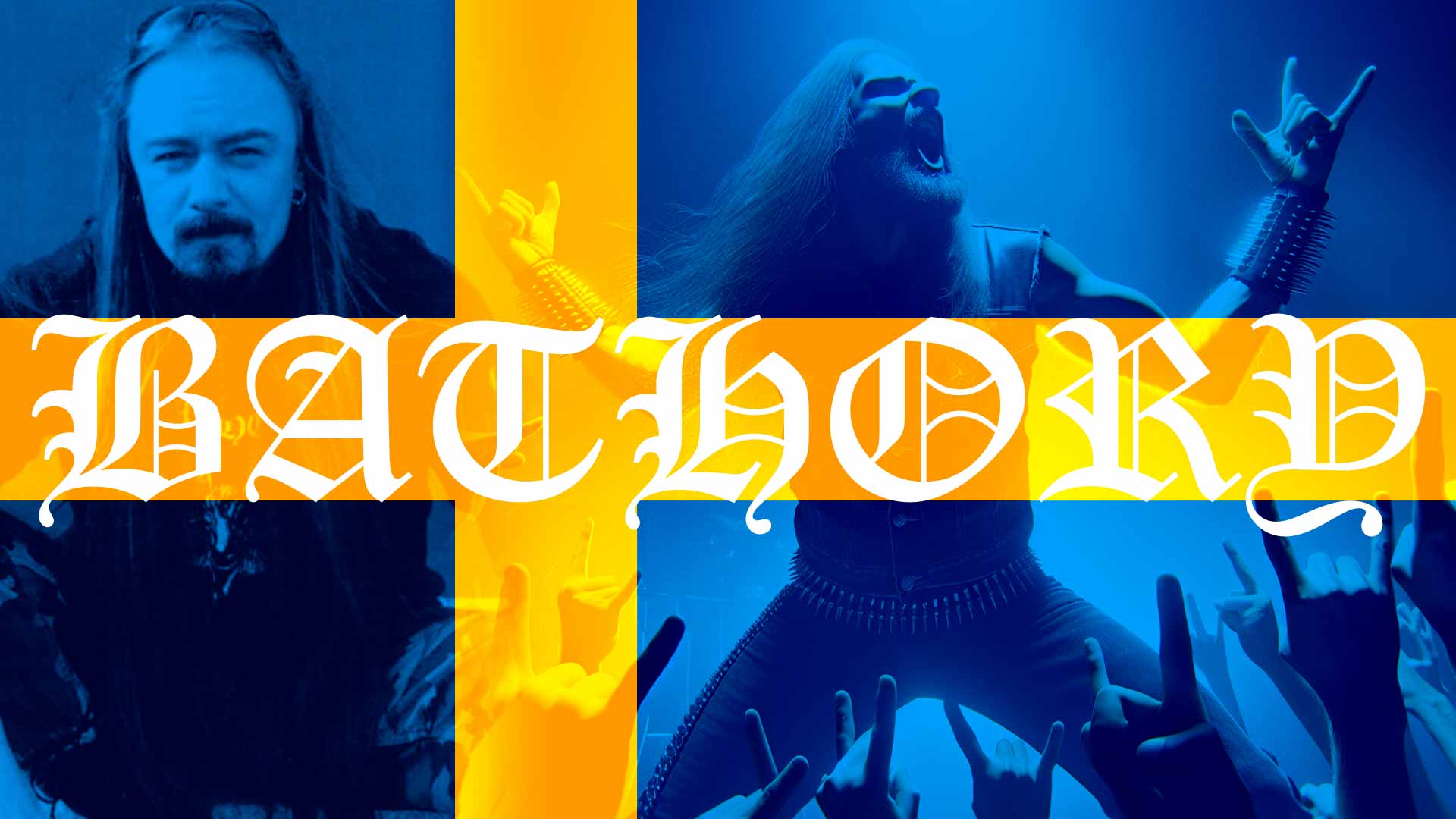
In the shadowy annals of extreme metal, few names resonate with the same mythic power and profound influence as Bathory. This Swedish phenomenon, virtually a one-man army led by the visionary Thomas Börje Forsberg, better known as Quorthon, didn’t just play black metal – it helped define it. For those unfamiliar with the blistering raw power and epic scope of black and Viking metal, prepare to journey into the heart of a band that carved its own path through the underground, leaving an indelible mark on countless artists and genres.
Birth of a Legend: Bathory’s Formative Years in the Early 1980s
The story of Bathory begins in 1983 in Vällingby, a suburb of Stockholm, Sweden. At a time when heavy metal was already splintering into various subgenres, a young Thomas Forsberg, barely out of his teens, was experimenting with a sound far more aggressive and unpolished than most. Initially formed with other members, Bathory quickly coalesced around Quorthon’s singular vision, becoming primarily his solo project with session musicians brought in as needed. This early period was characterized by a raw, unbridled energy, often recorded with rudimentary equipment, giving Bathory’s initial output a distinctly lo-fi yet intensely powerful sound. This “garage” aesthetic, born of necessity, would ironically become a hallmark of the burgeoning black metal scene.
Early Influences and the Dawn of a New Sound from Sweden
Quorthon was a musical sponge, drawing inspiration from a diverse range of bands that, while not explicitly “black metal,” laid the groundwork for the extreme sounds to come. His early influences were crucial in shaping Bathory’s unique sonic identity.
| Band Name | Active Period | City of Origin | Key Influence |
| Motörhead | 1975-2015 | London, UK | Rawness, speed, rebellious attitude |
| Venom | 1978-Present | Newcastle upon Tyne, UK | Satanic imagery, aggressive vocals, “black metal” moniker |
| Slayer | 1981-Present | Huntington Park, USA | Speed, aggression, dark lyrical themes |
| Black Sabbath | 1968-Present | Birmingham, UK | Doom, dark atmosphere, heavy riffs |
While bands like Venom were already flirting with overtly satanic themes and a more abrasive sound, Bathory pushed these boundaries even further. Quorthon’s early compositions, such as those found on their self-titled debut album (1984) and “The Return……” (1985), were characterized by blistering fast tempos, heavily distorted guitars, shrieked vocals, and an overall sense of chaotic energy. These albums, though raw, possessed an undeniable primal force that immediately set Bathory apart from their peers. This wasn’t just thrash metal; it was something darker, more menacing, and ultimately, more “evil.”
Embracing the Shadows: Bathory and the Evolution of Black Metal
As the 1980s progressed, Bathory continued to refine its sound, and in doing so, further cemented its place as a progenitor of black metal. Albums like “Under the Sign of the Black Mark” (1987) showcased a more developed songwriting approach while maintaining the band’s signature ferocity. This era saw Bathory delve deeper into themes of anti-Christianity, paganism, and an almost mythological darkness, all delivered with an increasingly sinister atmosphere. The influence of these early works on the nascent Norwegian black metal scene, which would explode in the early 1990s, cannot be overstated. Bands like Mayhem, Darkthrone, and Emperor openly cited Bathory as a major inspiration, adopting and evolving many of the stylistic and thematic elements pioneered by Quorthon.
The Hammer of the North: Quorthon and the Viking Metal Saga
Towards the end of the 1980s, a significant shift occurred in Bathory’s musical direction. With albums like “Blood Fire Death” (1988) and especially “Hammerheart” (1990), Quorthon began to incorporate strong elements of Norse mythology and Viking heritage into his music. This marked the birth of “Viking Metal,” a subgenre that Bathory single-handedly created and popularized.
This transition was not a sudden departure but a natural evolution for Quorthon, who was deeply fascinated by his Scandinavian roots. The music became more epic, incorporating slower tempos, cleaner guitar passages, and soaring, almost chanted vocals, while still retaining a sense of power and grandeur. Lyrically, tales of ancient gods, battles, and Norse sagas replaced earlier satanic themes. This pioneering fusion of heavy metal with Viking lore opened up entirely new lyrical and musical avenues for extreme metal, influencing countless bands who would later explore similar themes.
Bathory’s Studio Album Discography: A Journey Through Metal Eras
Here is a comprehensive list of Bathory’s official studio album releases, highlighting their release year and the primary metal style they represent, showcasing Quorthon’s musical evolution:
| Album Title | Release Year | Primary Metal Style |
| Bathory | 1984 | Black Metal / Proto-Black Metal |
| The Return…… | 1985 | Black Metal |
| Under the Sign of the Black Mark | 1987 | Black Metal |
| Blood Fire Death | 1988 | Black Metal / Early Viking Metal |
| Hammerheart | 1990 | Viking Metal |
| Twilight of the Gods | 1991 | Viking Metal |
| Requiem | 1994 | Thrash Metal |
| Octagon | 1995 | Thrash Metal |
| Blood on Ice | 1996 | Viking Metal |
| Destroyer of Worlds | 2001 | Thrash Metal / Viking Metal |
| Nordland I | 2002 | Viking Metal |
| Nordland II | 2003 | Viking Metal |
This table clearly illustrates Bathory’s journey from raw black metal pioneers to the undisputed creators of Viking metal, with a brief but notable foray into thrash metal in the mid-90s, before returning to his epic Viking sagas.
Bathory’s Dominant Influence and Enduring Legacy
Bathory’s ascent from humble beginnings to a dominant force in extreme metal is a testament to Quorthon’s uncompromising artistic vision. Despite rarely performing live and largely operating in the shadows, his music spoke volumes. The band’s impact can be felt across the entire spectrum of extreme metal, not just black and Viking metal.
- Pioneering Black Metal: Bathory’s early works laid down the sonic and thematic blueprint for the genre, inspiring countless bands to embrace rawness, aggression, and dark aesthetics.
- Creating Viking Metal: Quorthon’s exploration of Norse mythology and the resulting musical shift gave birth to an entirely new subgenre, showcasing the potential for epic storytelling within extreme music.
- DIY Ethos: Bathory’s independent spirit and “do-it-yourself” approach to recording and releasing music became a template for many underground bands.
- Artistic Integrity: Quorthon’s unwavering dedication to his artistic vision, evolving Bathory’s sound without succumbing to trends, earned him immense respect.
Quorthon tragically passed away in 2004, leaving behind a profound musical legacy. While he may be gone, the spirit of Bathory lives on, echoing in the furious blast beats of black metal, the triumphant anthems of Viking metal, and the unyielding spirit of artistic independence that defined his remarkable career.
Conclusion: The Immortal Spirit of Bathory
Bathory, and the enigmatic genius of Quorthon, stands as a towering monument in the landscape of extreme music. From the raw, unholy din of its early black metal offerings to the majestic, battle-scarred anthems of its Viking metal era, Bathory consistently pushed boundaries and redefined genres. For those venturing into the world of extreme metal, understanding Bathory is not merely an option but a necessity. It is the primal scream, the ancient saga, and the undying flame that continues to inspire generations of musicians to explore the darkest and most epic corners of human expression. The legacy of Quorthon and Bathory is not just a chapter in metal history; it is a foundational text, forever etched in the annals of the infernal majesty.



Add comment