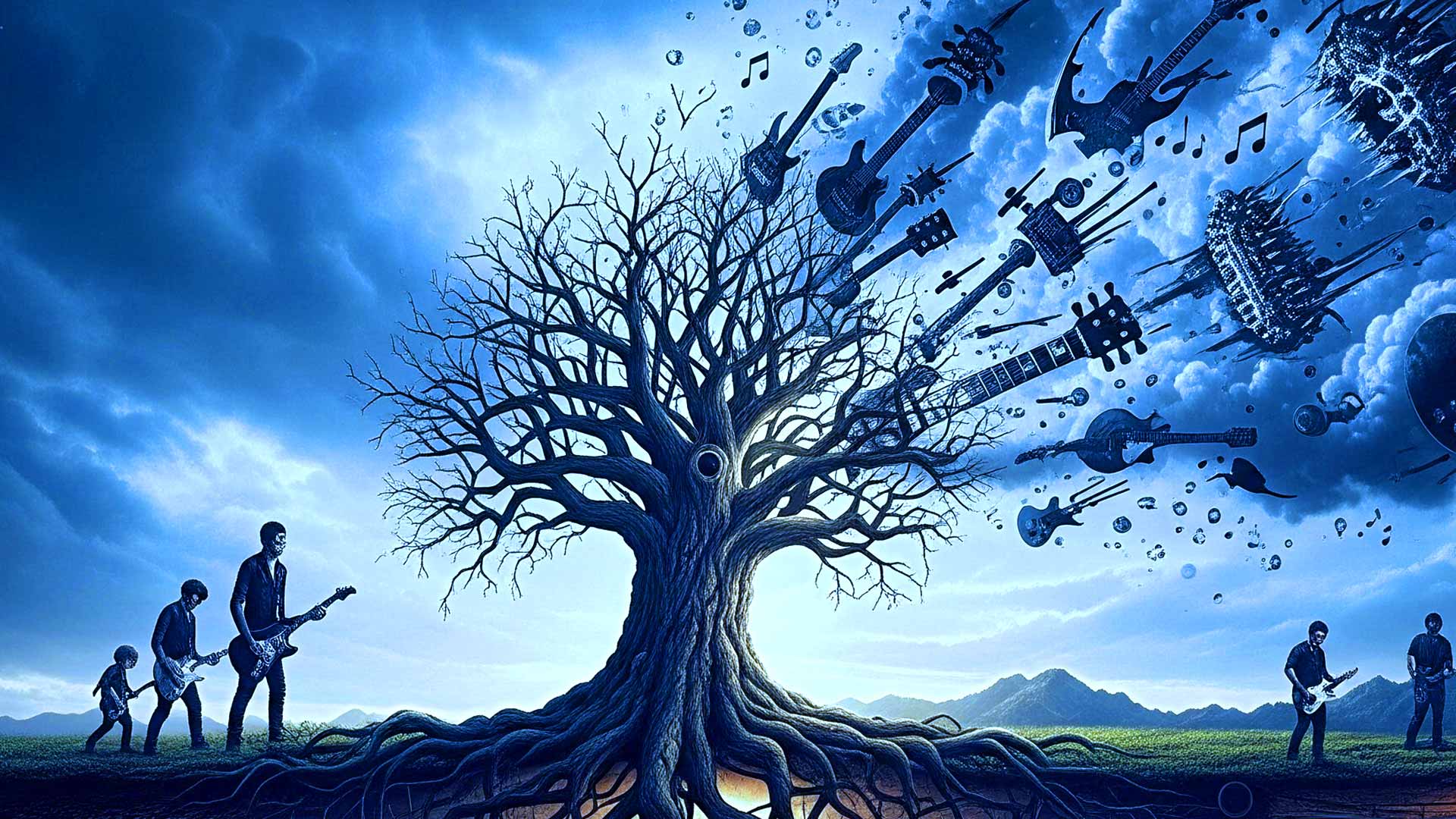
The late 1980s and early 1990s were a pivotal period for heavy metal. As established subgenres like thrash metal reached their commercial peak, a growing segment of the metal community yearned for something darker, faster, and undeniably heavier. This insatiable desire for extremity gave rise to two of the most uncompromising and influential genres in metal history: Death Metal and Grindcore.
This article will delve into the origins and evolution of these groundbreaking styles, exploring the societal and musical landscape that fueled their creation. We’ll introduce you to the pioneering bands and individuals who shaped their sound, highlighting their unique contributions and lasting impact.
The Quest for Sonic Annihilation: Why Metal Needed More
By the mid-to-late 1980s, thrash metal bands like Metallica, Slayer, Megadeth, and Anthrax had pushed the boundaries of speed and aggression to unprecedented levels. Their intricate riffs, blistering solos, and often socially conscious lyrics resonated with a global audience. However, for a dedicated underground, even thrash began to feel, at times, constrained.
There was a palpable hunger for music that was raw, unpolished, and unflinchingly brutal. This wasn’t just about speed; it was about dissonance, guttural vocals, complex rhythmic shifts, and lyrical themes that delved into the darkest corners of human experience – death, gore, existential dread, and societal decay. The desire was for a sound that mirrored the chaos and anxieties of the era, pushing past conventional song structures and melodic sensibilities. This yearning for a truly extreme sonic assault laid the groundwork for the emergence of Death Metal and Grindcore.
The Unholy Trinity: Pioneering the Grindcore Sound
While both genres shared a common pursuit of extremity, they developed distinct characteristics. Death Metal often focused on technicality, intricate riffing, and a more structured (albeit still brutal) approach, while Grindcore embraced brevity, blast beats, and a relentless, often chaotic, sonic assault.
Let’s explore some of the seminal bands that defined these nascent genres:
Napalm Death: The Architects of Grindcore
Hailing from the industrial heartland of England, Napalm Death weren’t just a band; they were a movement. Formed in Meriden near Birmingham in 1981, they initially experimented with various punk and hardcore styles before solidifying their groundbreaking grindcore sound.
Key Figures:
- Nicholas Bullen (Nic Bullen): A co-founder, initial vocalist, and bassist, Bullen was instrumental in shaping their early experimental sound.
- Justin Broadrick: Early guitarist and a key figure in the development of their sound, later of Godflesh.
- Mick Harris: The relentless drummer who pioneered and popularized the “blast beat,” a cornerstone of both grindcore and death metal.
- Lee Dorrian: The guttural vocalist who defined their early vocal style.
- Shane Embury: The long-standing bassist, who became a crucial songwriter and a constant presence in the band.
- Mark “Barney” Greenway: The iconic vocalist who joined later and solidified their identity.
Influence: Napalm Death was heavily influenced by early hardcore punk bands like Discharge and Extreme Noise Terror, but they pushed the speed and aggression to an unprecedented level, often incorporating incredibly short songs and politically charged lyrics. Their debut album, Scum (1987), is widely considered the blueprint for grindcore.
| Band Name | Active Period | Country of Origin | City of Origin |
| Napalm Death | 1981-Present | United Kingdom | Meriden/Birmingham |
Terrorizer: The Grindcore-Death Metal Crossover
From the sun-drenched, yet strangely brutal, landscape of Los Angeles, California, Terrorizer emerged as a band that seamlessly blended the ferocity of grindcore with the burgeoning sounds of death metal. Formed in 1987, their sole full-length album, World Downfall (1989), became an instant classic and a cornerstone for both genres.
Key Figures:
- Jesse Pintado: The powerhouse guitarist, later of Napalm Death, whose riffs were both complex and crushingly heavy.
- Pete Sandoval: The legendary drummer, also of Morbid Angel, whose inhuman speed and precision earned him the nickname “The Wicked Gringo.”
- David Vincent: Although not an official member, the Morbid Angel vocalist provided session vocals on World Downfall.
- Oscar Garcia: The original vocalist and bassist.
Influence: Terrorizer drew inspiration from early death metal pioneers like Possessed and Death, as well as the raw aggression of hardcore punk. Their music was characterized by blistering speed, politically charged lyrics, and a raw, unpolished production that enhanced its visceral impact.
| Band Name | Active Period | Country of Origin | City of Origin |
| Terrorizer | 1987-1992, 2005-Present | United States | Los Angeles |
More Grindcore Pioneers
Beyond Napalm Death and Terrorizer, several other bands were instrumental in defining and expanding the grindcore sound during its formative years.
| Band Name | Active Period | Country of Origin | City of Origin |
| Carcass | 1985-1996, 2007-Present | United Kingdom | Liverpool |
| Extreme Noise Terror | 1985-Present | United Kingdom | Ipswich |
| Repulsion | 1984-1989, 2003-Present | United States | Flint, Michigan |
| Sore Throat | 1987-1990 | United Kingdom | St Helens |
| Agathocles | 1985-Present | Belgium | Zichem |
| S.O.B. | 1986-Present | Japan | Osaka |
The Global Expansion of Extremity: Death Metal Across Continents
The groundwork laid by these early bands quickly led to an explosion of creativity across the globe. Death Metal, in particular, saw distinct regional sounds emerge, each contributing to the genre’s rich tapestry.
North American Death Metal
North America, especially Florida, became a fertile ground for death metal, developing a distinct, often more technical and riff-oriented style.
| Band Name | Active Period | Country of Origin | City of Origin |
| Death | 1983-2001 | United States | Altamonte Springs/Orlando |
| Morbid Angel | 1983-Present | United States | Tampa, Florida |
| Obituary | 1984-Present | United States | Tampa, Florida |
| Possessed | 1983-1987, 1990-Present | United States | San Francisco |
| Cannibal Corpse | 1988-Present | United States | Buffalo, New York |
| Deicide | 1987-Present | United States | Tampa, Florida |
| Suffocation | 1988-Present | United States | Long Island, New York |
European Death Metal
Europe, particularly Sweden and the United Kingdom, cultivated unique sounds, often characterized by distinct guitar tones and varying levels of melody and brutality.
| Band Name | Active Period | Country of Origin | City of Origin |
| Pungent Stench | 1988-1995, 2001-2007, 2013-Present | Austria | Vienna |
| Atrocity | 1985-Present | Germany | Ludwigsburg |
| Entombed | 1987-Present | Sweden | Stockholm |
| Dismember | 1988-2011, 2019-Present | Sweden | Stockholm |
| Unleashed | 1989-Present | Sweden | Stockholm |
| Grave | 1986-Present | Sweden | Visby |
| Bolt Thrower | 1986-2016 | United Kingdom | Coventry |
| Benediction | 1989-Present | United Kingdom | Birmingham |
| Gorefest | 1989-1998, 2004-2009 | Netherlands | Goes |
| Pestilence | 1986-1994, 2008-Present | Netherlands | Enschede |
| Hypocrisy | 1991-Present | Sweden | Ludvika |
Other Continents: The Global Reach of Death Metal
While North America and Europe were primary hubs, death metal’s influence soon spread, leading to the formation of significant bands in other parts of the world.
| Band Name | Active Period | Country of Origin | City of Origin | Continent |
| Sepultura | 1984-Present | Brazil | Belo Horizonte | South America |
| Krisiun | 1990-Present | Brazil | Ijuí | South America |
| Sadistik Exekution | 1986-Present | Australia | Sydney | Oceania |
| Cryptopsy | 1992-Present | Canada | Montreal | North America |
| Gorguts | 1989-Present | Canada | Sherbrooke | North America |
The Enduring Legacy: Impact and Evolution
The development of Death Metal and Grindcore in the late 1980s and early 1990s was more than just a musical phenomenon; it was a cultural shift within the metal community. These genres provided an outlet for a raw, untamed aggression that other styles couldn’t quite capture. They challenged conventions, embraced dissonance, and delved into lyrical territories that were often taboo, forcing listeners to confront uncomfortable truths and push their own boundaries of what was acceptable in music.
Today, Death Metal and Grindcore continue to thrive, evolving into numerous subgenres like brutal death metal, technical death metal, melodic death metal, goregrind, and more. Their influence can be heard across the spectrum of extreme music, proving that the hunger for sonic annihilation, first ignited by these pioneering bands, remains as potent as ever.
Conclusion: A Testament to Uncompromising Artistry
The emergence of Death Metal and Grindcore was a direct response to a burgeoning need within the metal community for music that was unashamedly harder, faster, and more extreme. From the blast beats of Napalm Death to the technical prowess of Florida’s finest, and the melodic darkness of Sweden, these genres forged a new path for heavy music. They were built by dedicated artists who, often against mainstream trends, dared to push the boundaries of sound and expression. Their legacy is a testament to the power of uncompromising artistry and the enduring human desire for the truly extreme.






Add comment